
- 7696551555
- peoplespropertypoint@gmail.com
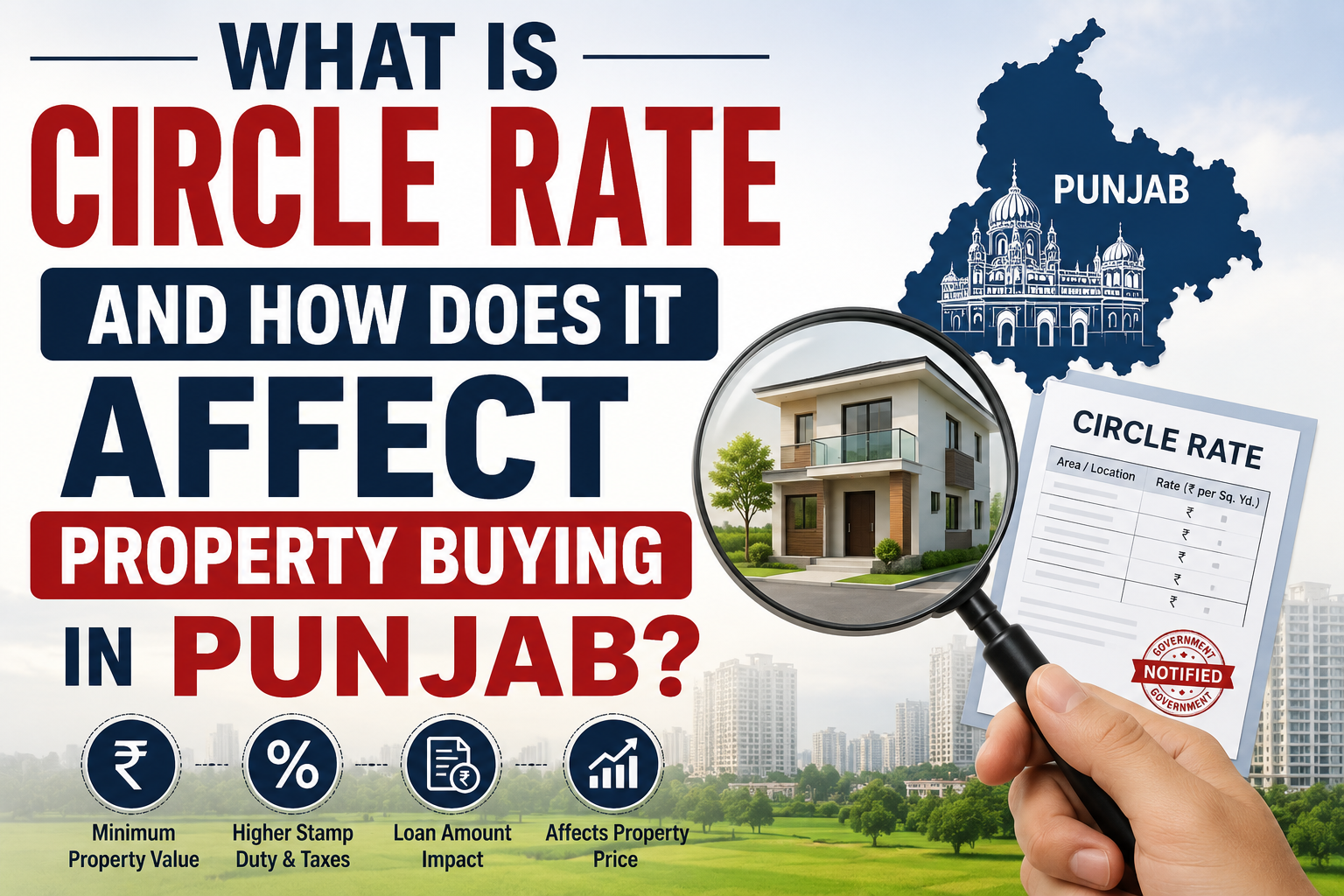
In the Punjab, the real estate market is expanding and it is witnessing a major transformation. It is driven by rapid infrastructural growth, booming commercial hubs like Mohali and Zirakpur and high NRI investments, the state has become a goldmine for property buyers. Many buyers focus only on the market price of a property, but the circle state plays an equally important role in determining registration charges, stamp duty, taxation and even loan eligibility.
However, amongst all this, the most vital term for you to learn is the “Circle rate”, officially known as the Collector Rate in Punjab. Because the market in Punjab is fast moving and the overall sector of real estate is evolving very quickly in 2026, with all this growth of urbanisation, the development of infrastructure and rising of the rise in demand for real estate and housing properties.
Be it purchasing an upmarket flat in SAS Nagar Mohali, fertile farmlands in the vicinity of Jalandhar or an office space in the city of Ludhiana, your legal lowest price ceiling is decided by the collector’s rate. This article focuses on familiarising yourself with circle rates in Punjab, their influence over property sales, contemporary market dynamics and sensible recommendations to evade pricey errors.
What is the Circle Rate / Collector Rate? The Circle Rate / Collector Rate is the lowest value at which a property can be officially registered in India. This is because property rates change with respect to changing city expansion and inflation and hence, they are reviewed and revised periodically by the government. There are two important reasons as to why Circle rates/ collector rates were introduced by the government in India:
Prevent Tax Evasion – Ensuring that transactions are not undervalued to bypass local taxes
Streamline Revenue – Providing a reliable framework for calculating state revenue via stamp duty and registration fees.
In every state, there are different terms for Circle Rate. Maharashtra refer to the Ready Reckoner Rate and Karnataka calls it the Guidance Value. In Punjab, it is strictly termed the Collector Rate.
It is determined by the state government based on factors such as:
Many people mistakenly believe they can register a property at any value agreed upon between the buyer and seller. That isn’t how property registration works. If you purchases price is lower than the applicable circle rate, government authorities generally calculate stamp duty and registration charges on the circle rate, not your negotiated price.
This directly affects:
One of the most common mistakes inexperienced homebuyers make: assuming they can go to the seller for the government- notified collection rate. Rarely happens:
| Feature | Collector Rate | Market Rate |
| Defined By | The State Government/Local district administration. | Market dynamics such as demand and infrastructure |
| Frequent Change | Periodically | Constantly fluctuating based on economic trends. |
| Purpose | Used to calculate stamp duty, registration charges and capital gains tax. | The actual price negotiated between a willing buyer and seller |
| Valuation Tendency | Generally lower than the actual market value. | Usually higher, reflecting premium amenities and localised demand. |
Over the past few years Punjab real market in Punjab has undergone noticeable changes and several factors that have increased the importance of circle rates:
The property market in Punjab is witnessing several important developments that buyers should know about. The Government of Punjab, through its respective district administrations, has systematically revised collector rates across prime urban zones to align closer with actual market realities and boost state revenue.
There have been significant changes to collector rates in the Greater Mohali region. The sub-markets of SAS Nagar, which consist of prominent commercial and residential sectors, have increased rates of individual luxury housing in a targeted manner due to issues related to under reporting in high-end luxurious projects. Schedules of Kharar and Zirakpur, which are high-demand markets, have also been revised to ensure that the cost of property across RERA approved townships will be in parity.
Commercial collector rates on highways, bypasses have been raised in Ludhiana, Jalandhar – both big industrial centers, so that huge warehouses or industrial plots command present economic value
The collector rates have been amended in Amritsar, specifically in areas of commercial significance close to the Golden Temple and outer ring roads currently being constructed. The adjustment aims to realign the rates with the fast paced commercial development induced by heavy tourist activity.
Collector rates are not uniform across a city; they vary drastically from street to street based on several factors:
Commercial properties consistently generate higher collection rates. The agricultural rate class is handled quite differently; the rate structure is usually applied on a per-acre basis.
There is far greater value placed upon plots along wide, open sector roads or even on national highways or some sort of premium public facilities than there would be for one landlocked deep within a pocket.
For buildings (whether structures are on a property, whether these be brand-new or established homes, it’s really critical to know how old that home or framework is), and if it is old, it gains from depreciation. A home more aged than one built today will often pay lower collection rates.
To ensure a smooth, legally compliant and financially optimised property purchase in Punjab, keep these strategies in mind:
Know your total upfront cost beforehand: Apart from the quoted seller rate, ensure you know your updated Stamp Duty liability in accordance with the collector’s updated rate document, so that you are not left without liquidity when the time comes.
Assess the LTV Gap: For those using heavily dependent on Bank Loan, know the difference between the market value and the collector rate. A wider differential translates into a greater need for self-contributions for the deal to fructify.
Mandate Paper trail of all funds: Ensure all transacted money has been captured and documented properly in your Sale Agreement. Do not consent to under-registration of property, for it is extremely risky from a financial as well as legal point of view in the longer term.
This outlook for Punjab’s real estate sector remains optimistic. Several long term factors support growth:
The property buyers who are planning to buy a property in Punjab should be well aware of the circle rate. The market rate is the price that the buyer and seller agree upon. However, the circle rate is used to define the base value for registering the property and calculating the stamp duty and other charges.
When the real estate sector of Punjab continues to grow in the year 2026 with new infrastructure projects, online services and a growing demand for homes, educated buyers can benefit from a better choice in Punjab. You can compare the market rate with the circle rate before buying a property and also check all legal documents. People Property Point will guide you through every step of your property journey. Simply click the link to discover eveything you need to know before making the right investmetn decision.
It is the minimum property value determined by the Punjab Government in respect of registration of properties. It is used as the benchmark to determine stamp duty charges and registration fees.
No. Market value is arrived at through negotiation between the buyer and the seller, while the circle rate is determined by the Government as the minimum valuation for registration.
If the sale value of the property is less than the circle rate, then all calculations related to registration will be done as per the higher valuation fixed by the Government, as per law.
Yes. Property valuation plays an important role during loan appraisal by banks and lenders.
It is revised by the State Government from time to time, depending upon various factors like the development of the area. Buyers should check the prevailing circle rates before buying property.
Tags: What is Circle Rate and How Does It Affect Property Buying in Punjab?




 Call us
 Whatsapp