
- 7696551555
- peoplespropertypoint@gmail.com
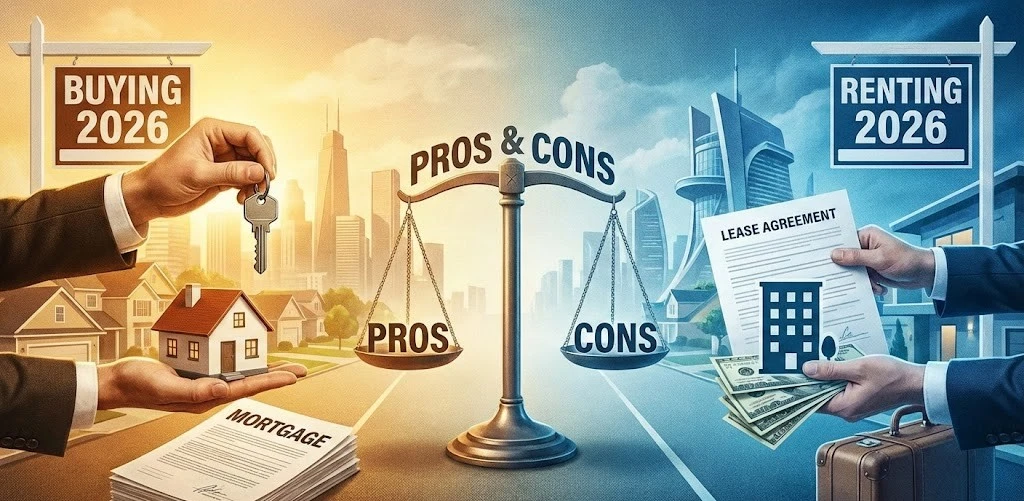
Deciding to buy or rent a property in India? In 2026, the decision isn’t that simple between the two. You need to consider the rising property prices. But can you forget the rental inflation? No. Changing work patterns is something that really matters here. Indians are now thinking what financially smart means.
Renting is seen as more and more flexible these days. But there’s no better feeling then owning a home. So, there’s really no single answer on which to go for. But you have a smarter way to decide. This blog discusses the pros and cons of buying vs renting property in 2026.
Read more: Pros And Cons Of Buying vs Renting Property In 20261. Long Term Investment & Equity Growth
You’re doing more than just paying for a place here. Buying a property us much more than that. You’re actually building equity which is the ownership value. This is how you benefit financially if the property value goes up. Real estate actually appriaciates yearly in many markets. You as a homeowner are building wealth this way.
2. Stability & Control
Owning means you decide what happens at home. You need to ask for a landlord’s permission. Want to renovate or customise? It’s way simpler.
3. Potential Tax Advantages
Did you know about tax breaks on mortgage interest? Many homeowners get them in many countries. This is a huge benefit for you.
4. Lock in Long Term Costs
Locking into a fixed mortgage rate? Your principal and interest payments are going to be predictable. This is unlike rent, which mostly just goes up.
5. Sense of Belonging & Emotional Security
Owning feels like a real home to many. This’s just housing for homeowners. This is especially if you’re raising a family.
1. High Upront Costs
You should know about some of these costs before you even move in:
2. Monthly Mortgage Burden
How can one forget the EMIs? Many buyers can have a large chunk of monthly incomes. This is mostly more than rent in the short term.
3. Maintenance & Hidden Costs
As a homeowner, you have to cover:
4. Less Flexibility
It can be hard to relocate quickly for a job. You get literally tied to that property you bought. Also, selling or renting isn’t that simple too.
1. Lower Initial Costs
You don’t need a massive down payment for renting. A simple security can work out for you. In addition to this, you pay the first month’s rent.
2. Maximum Flexibility
The lease terms run just 1 to 2 years, which means more freedom. You can easily move out for career changes. You don’t have to sell a home just to move out.
3. Zero Maintenance Headaches
Most of the repairs are handled by the landlord, so you stay stress free. Property maintenance also isn’t covered by you.
4. Financial Liquidity
You don’t have to type up cash for a down payment. You can invest that money easily somewhere else. You get a chance to invest more, getting more returns from:
5. Predictable, Short-Term Costs
You can do monthly budgeting more easier here. The rent you pay is a fixed monthly expense.
1. No Equity Building
You aren’t really building ownership as the rent goes to the landlord.
2. Annual Rent Hikes
Rent is raised each year in many cities. This is something that affects affordability.
3. Limited Personalization
You can’t really renovate the property without permission.
4. Lease Uncertainty
You may have to move if the landlord doesn’t renew leases.
There’s really no one answer when it comes to buying vs renting property in 2026. Your choice depends on your finances and lifestyle goals.
A – There’s no universal answer here. Buying can build you long term wealth. Go for renting if you want flexibility.
A – Yes, mostly homeowners can help you create equity over time.
A – You should stay at least 5 to 7 years.
A – Yes, in many markets, renting is budget friendly.
A – Look at:
A – It’s a popular choice of many people, as renting gives you:
A – First time buyers should focus on:




 Call us
 Whatsapp